 COMPASS
Dr. Renee Sieber - Participatory AI Governance as a Sustainability Goal

Abstract: AI increasingly shapes governmental decision-making both locally and across political boundaries: who obtains a visa, who is surveilled, or who obtains services. How do we best govern AI? Around the world, AI governance models have been top-down, run by government officials and technical elites, and rely on “soft law” of internal ethics reviews or external impact assessments, muting the voices of those most impacted. I will describe participatory AI governance (PAIG) as a model to design and deploy AI with and not just for communities. I will explore how activities such as participatory design and budgeting, third-party audits, and community-centered impact assessments can begin to define a PAIG model to reduce collective harm and build community trust. Importantly, this PAIG is bottom-up and embeds political power and influence, which often is neglected or resisted by government and tech evangelists. Therefore, the model includes methods to resist or halt AI systems. It includes acknowledgement that certain communities have legitimate reasons to distrust status quo AI and need to assume control of these technologies. Ultimately, PAIG is not just about doing AI for good (or responsibly, safely or securely)—it’s about doing AI for social justice that truly benefits communities.
Bio: Dr Renée Sieber is an associate professor at McGill University. She has 20+ years experience working at the intersection of civic empowerment and computational technologies. She is best known for her research and practice on public participation in computerized mapping and in climate modeling. She currently researches public participation in AI. She advised the design of two AI risk assessment tools and led the public participation subgroup of the IEEE working group on AI procurement. For the past 5 years, she has co-hosted the monthly community of practice on AI in Canadian Municipalities. This year she was named 2025’s 100 brilliant women in AI Ethics.
Dr. Pedro Reynolds-Cuéllar - Why Designing with Place Matters in Technology Development
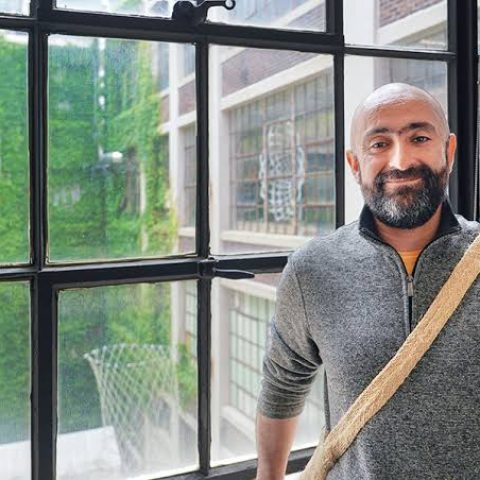
Abstract: In this talk, I will discuss field experiences learning about and co-creating technology with various groups in rural Colombia over the past 10 years of my career. Using several case studies, I will discuss some of the challenges and opportunities that arise from approaching technology this way. I will provide examples of how places often determine how people approach technology and how, in turn, technology ends up transforming places in unique ways. I will close by reflecting on how this place-based take into technology represents an opportunity for computing professionals.
Bio: Dr Pedro Reynolds- Cuéllar is a Research Scientist at the Robotics and AI Institute (RAI) where he does research that helps providing the data needed for evidence-based societal choices about the design, integration, and/or regulation of robotics and AI. Pedro received my Bachelor’s of Sciences in Linguistics from the National University of Colombia, and a Masters in Science from the Personal Robots group at the MIT Media Lab. He did his Ph.D jointly between the Arts, Culture, & Technology, and the Media. Arts and Sciences (MIT Media Lab) departments. He is also the co-founder of Diversa, a design collective and organization focused on supporting rural technology across Colombia.